What small modular reactors are to nuclear, PROTUR is to water.
Small, factory-built units deployed by the dozen, scaling by number rather than size. No dam, no years of construction – just water that's already flowing.


Bladeless micro hydro turbine
We manufacture bladeless micro hydro turbines in the Czech Republic, and install and service them anywhere in the world, or build them with you, in your country.
Principle
Inside a cone, the water forms a vortex and rushes through a narrow crescent beside the rotor. This rolls the hemisphere along the wall in a precessing orbit – and that motion drives the generator.
Energy
It runs 24 hours a day, 365 days a year. At 2 m of head, one PROTUR 600 makes about 36 kWh a day, and turbines can be installed side by side.
A new segment · Modular micro hydro
<1%
of river barriers are higher than 15 m.
That's where large hydropower plants stand.
68%
of river barriers are lower than 2 m. Over 800,000 sites in Europe alone – too low for conventional turbines. This is where PROTUR can generate.
| Barrier height | Class | Share of barriers |
|---|---|---|
| under 2 m | PROTUR segment | 68% |
| 2–5 m | Small hydropower | ≈22% |
| 5–15 m | Medium head | ≈9% |
| over 15 m | Large hydropower | <1% |
Europe's 1.2 million river barriers by height, one square = 1%. Source: AMBER project, Belletti et al., Nature 2020 (68% under 2 m, over 90% under 5 m, under 1% over 15 m). Intermediate classes derived.
Where other turbines stop
Conventional hydropower needs height, a dam and large volumes of water. Most water in industry and the landscape flows with only a small drop. PROTUR is built for exactly that water.
Where hydro turbines work
Conventional turbines need metres of head or cubic metres of flow. PROTUR works below them.
| Turbine | Flow | Head |
|---|---|---|
| Pelton | 20–10,000 l/s | 50–1,000 m |
| Francis | 300–30,000 l/s | 10–300 m |
| Kaplan | 1,000–50,000 l/s | 2–40 m |
| Crossflow turbine | 30–5,000 l/s | 3–100 m |
| Archimedes screw | 100–10,000 l/s | 1–10 m |
| PROTUR | 35–100 l/s per turbine, up to about 1,200 l/s side by side | 0.6–2 m |
Simplified typical ranges based on common turbine selection charts. PROTUR range per the PROTUR catalogue.
Small, factory-built units deployed by the dozen, scaling by number rather than size. No dam, no years of construction – just water that's already flowing.
<3%
of more than 90,000 US dams produce electricity
521 million m³
of treated water flows out of the world's 58,502 treatment plants every day
How does it work?

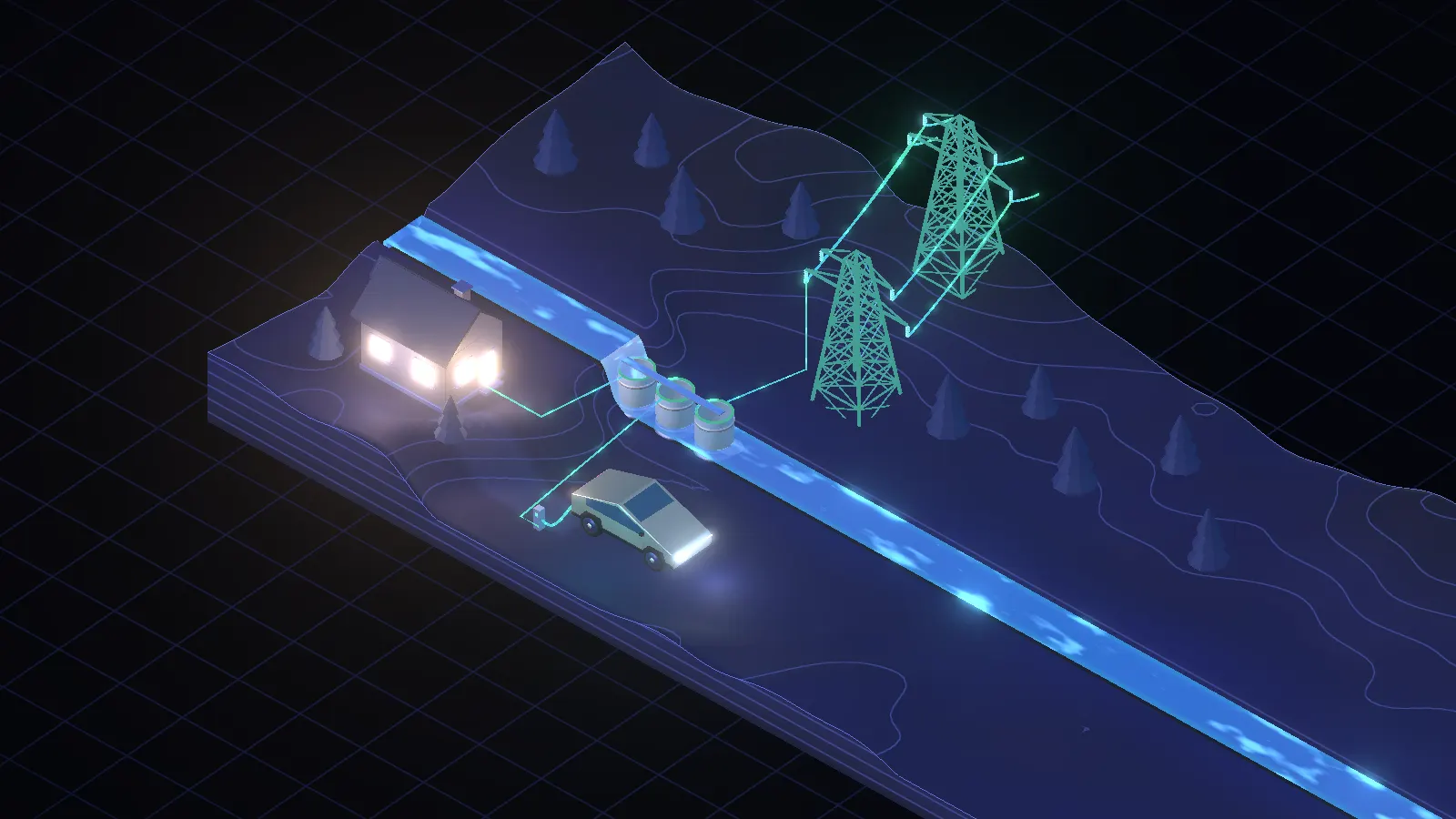
One head
The water flows.
Nothing to power yet.
Turbine 1
The first turbine
lights up a home.
Turbine 2
The next one
charges a car.
Turbine 3
The third sends power
back to the grid.
Turbines running
3
Current output
3.4 kW
Illustrative values
Production & service
Developed and manufactured in our own production in the Czech Republic.
We manufacture, install and service PROTUR anywhere in the world.
With partners we set up production in their country and transfer the know-how.
Why PROTUR
Six qualities that let PROTUR generate where other turbines can't.
from 0.6 m
Generates from just 60 cm of head, where conventional turbines don't pay off.
from 35 l/s
One turbine runs on the outflow of a treatment plant or a cooling circuit.
24/7
Day and night, all year round. Unlike the sun, water doesn't stop.
0 blades
The smooth rotor copes with debris-laden water and barely wears.
0 lubricants
No oils, no microplastics. Water leaves the turbine oxygenated.
2 technicians
No weir and no major civil works. The turbine doesn't block the watercourse.
Models & output estimate
Turbines line up side by side, and site output grows with every unit. See how many your water can drive.
For the lowest heads
0.3–0.5kW
Output per turbine, by head (0.6–1.2 m)
7–12kWh
Generated per day, by head
Mill races, ponds and smaller outflows.
For industry and larger flows
0.8–1.5kW
Output per turbine, by head (1–2 m)
19–36kWh
Generated per day, by head
In operation at the Kryvbasvodokanal water utility in Ukraine. Treatment plants, cooling circuits, outlets.
Adjust the head and flow. We'll pick the model and the number of turbines.
Generated per year
32.9MWh
3.8 kW output90 kWh per day
Indicative estimate based on catalogue values and a steady year-round flow. We'll confirm the exact output after a site assessment.
Get a site assessmentApplication studies

The night shift: where water flows, PROTUR can take over from diesel after dark.




Small streams and village irrigation systems next to schools, temples and fields.



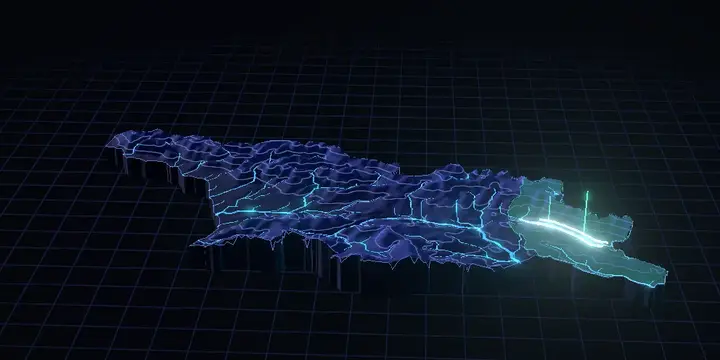
Georgia already runs on water. The canals can too.



Applications
The best site is one where water drains away regardless. PROTUR turns it into electricity without changing the process it flows through.
Treated effluent flows around the clock. The turbine recovers part of the electricity the plant consumes.
In operation: Miškovice WWTP, PragueProcess and treated water outflows. Energy that used to simply drain away.
In operation: ČEZ PrunéřovCooling water circulates all year. The turbine fits into the circuit without touching the process.
In industry: ORLEN Unipetrol refinery, LitvínovInlets and outlets. Water leaves oxygenated, free of lubricants and microplastics.
Assessed individuallyTreatment plants, supply mains and pumped mine water with a small drop.
In operation: Kryvbasvodokanal water utility, UkraineMill races, canals and remote sites beyond the reach of the grid.
In operation: a historic millAbout
The principle was invented by Assoc. Prof. Miroslav Sedláček of the Czech Technical University in Prague. Before offering PROTUR to the world, we took it through the lab, an industrial test facility and years of real-world operation at power plants. Today it is ready for series production and international markets.
1991–1994
Miroslav Sedláček (CTU) builds the first bladeless turbines. First patent application filed in 1994.
2002–2003
The precession rolling turbine principle is protected in the Czech Republic and across Europe.
2013–2018
Working with CTU and P.F – Economy Consulting, the prototype becomes a practical machine.
2017–2021
An industrial test facility and the first installations. 2021: successful trial at the Prunéřov power plant.
Today
Two product lines in series production, installations in the Czech Republic and in Ukraine.
European patent EP 3513057 B1
and patents in 6 further countries
Precession fluid turbine: Czech priority of 16 September 2016, inventor Miroslav Sedláček.
European Inventor Award 2016 finalist
Miroslav Sedláček, inventor of the PROTUR principle, was one of three finalists in the Research category of the award given by the European Patent Office.
Partnering
Made in our Czech production, installed and commissioned by our team, serviced under warranty and after.
Site assessment →We transfer the know-how, train your engineers and set up assembly in your country, with our quality control.
Partnership or joint venture →With governments and development partners: measure the water, run a pilot, then scale.
Government or UN programme →Contact
A site to assess, a partnership or a programme: tell us what you have in mind and we'll reply with the next step. For a site, send the head, the flow and a few photos.