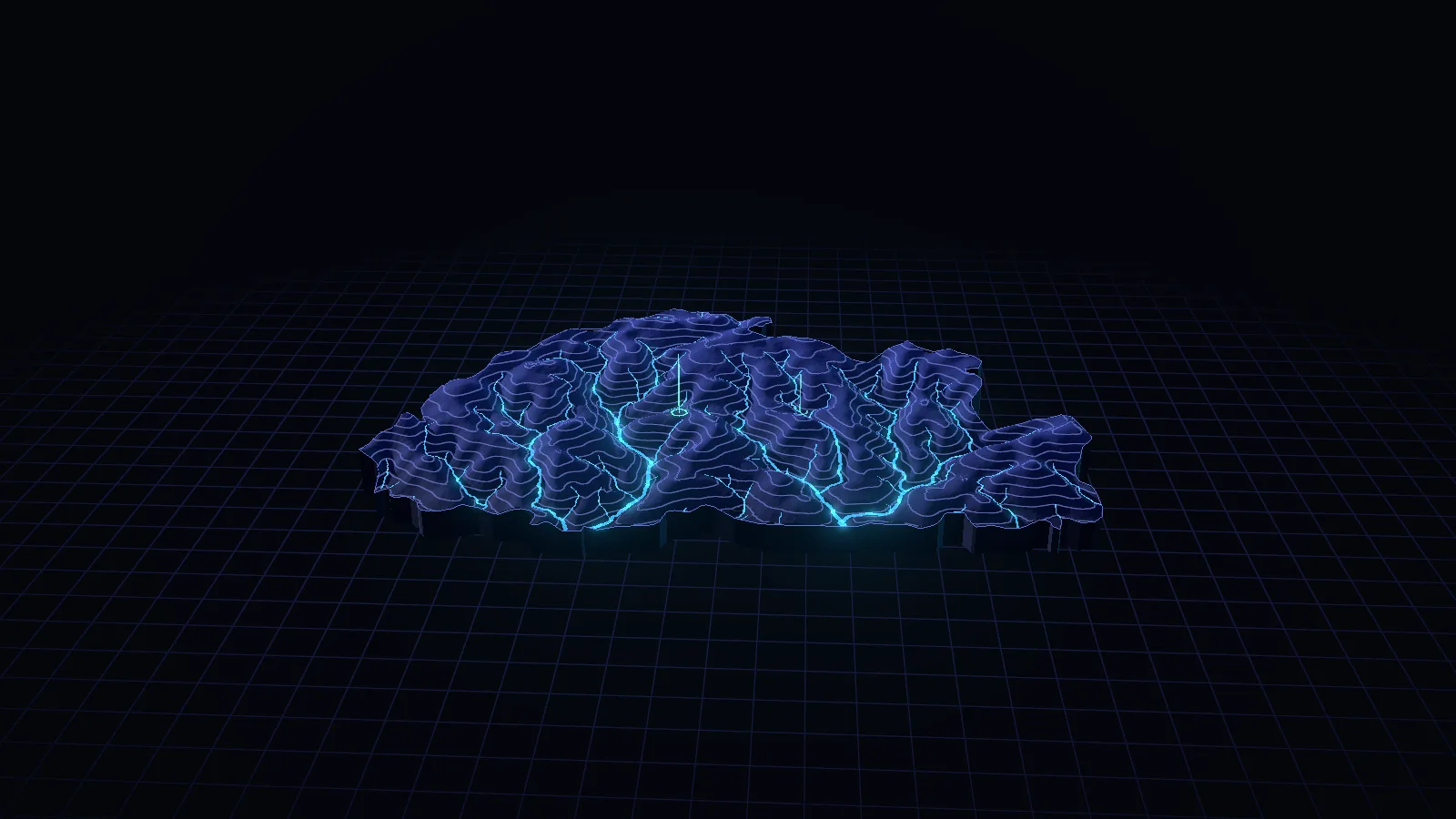
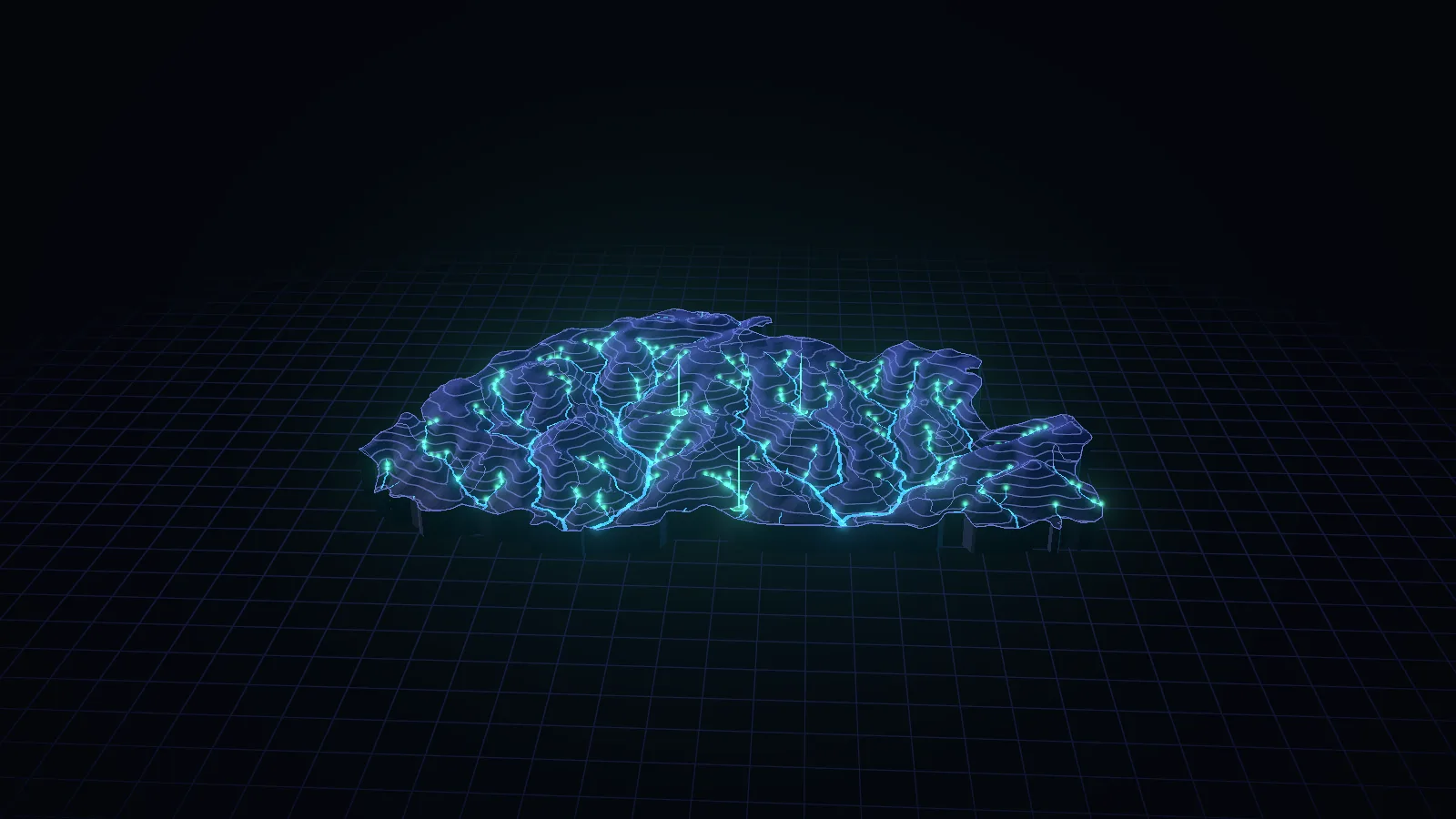
More than 70 km³ of water flows out of Bhutan every year. For centuries, small streams here have turned prayer wheels. Today, the same water could also make light.
> 70 km³of water flows out of Bhutan every year
Bhutan’s hydropower potential · one square = 1%
In use today · about 3.5 GW, a tenth
Not yet used · big rivers
Small water · streams, canals, mill races – not even in the count
DGPC 2025 · Power System Master Plan 2040
1 · The drop
The water falls a long way.
From mountains 7,570 m high down to less than 100 m, in only about 170 km. That is why every stream here runs fast.
7,570 m → < 100 min only about 170 km
2 · Big water
Big rivers power the whole nation.
And Bhutan plans to build much more by 2040.
3 · Resilience
Bhutan’s energy policy asks for resilience.
Power that keeps working through monsoon storms and winter. Big plants and the grid are one part. Small local sources can be another.
National Energy Policy 2025
4 · Small water
The water is already there. Right next door.
Streams, mill races and more than 1,200 village irrigation systems flow past schools, temples and fields. Too little for a normal turbine. Enough for PROTUR.
1,200+village irrigation systems
5 · PROTUR
A turbine without blades.
Made in the Czech Republic, or built with local partners. It needs a drop of just 0.6 m, runs day and night, and needs no dam and no oil. It works at night and under monsoon clouds, so it fits well alongside solar.
Nature and health in a high valley. Heritage in Bumthang. Livelihoods in the south.
1Phobjikha
Mountain stream · ~3,000 m · in series
2Chokhor
Mill race · Bumthang highlands · side by side + winter
3Gelephu
Irrigation canal · southern foothills · larger model
1PHOBJIKHA VALLEYA school and health postMountain stream · ~3,000 m · in series2CHOKHOR VALLEY · BUMTHANGA temple by the prayer wheelMill race · Bumthang highlands · side by side + winter3NEAR GELEPHUA farmers’ canalIrrigation canal · southern foothills · larger model
Gangkhar Puensum · 7,570 munder 100 m
Example 1 of 3 · Phobjikha valley
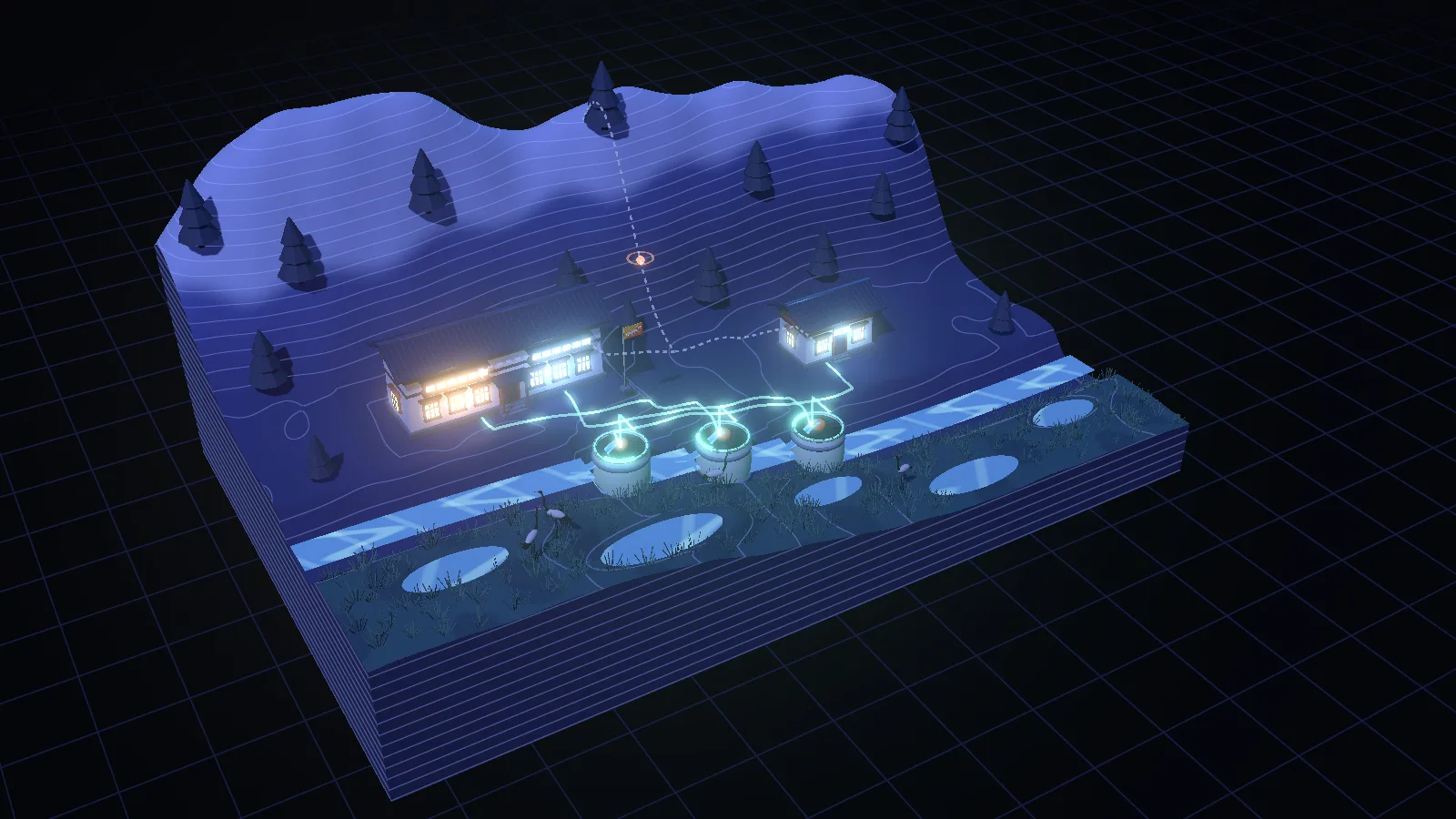
A valley that chose its cranes.
Why here Every power cable here runs underground, to keep the skies free for the black-necked cranes. But when an underground cable fails, the fault is hard to find.
When the underground cable fails, finding the fault can take days. The school and the health post go dark.
Turbine 1 keeps the vaccine fridge cold.
Turbine 2 lights the boarding house where students sleep.
Turbine 3 runs the computer room. The same water works three times, one step after another.
What it shows Local power from the stream, and not a single new line across the cranes’ valley.
Local power from the stream, and not a single new line across the cranes’ valley.
Turbines
3 / 3
Power
1.5 kW
Per day
36 kWh
3 × PROTUR 300 one after another · 40 litres per second · 3 steps of 1.5 m
Example data
Example 2 of 3 · Chokhor valley, Bumthang
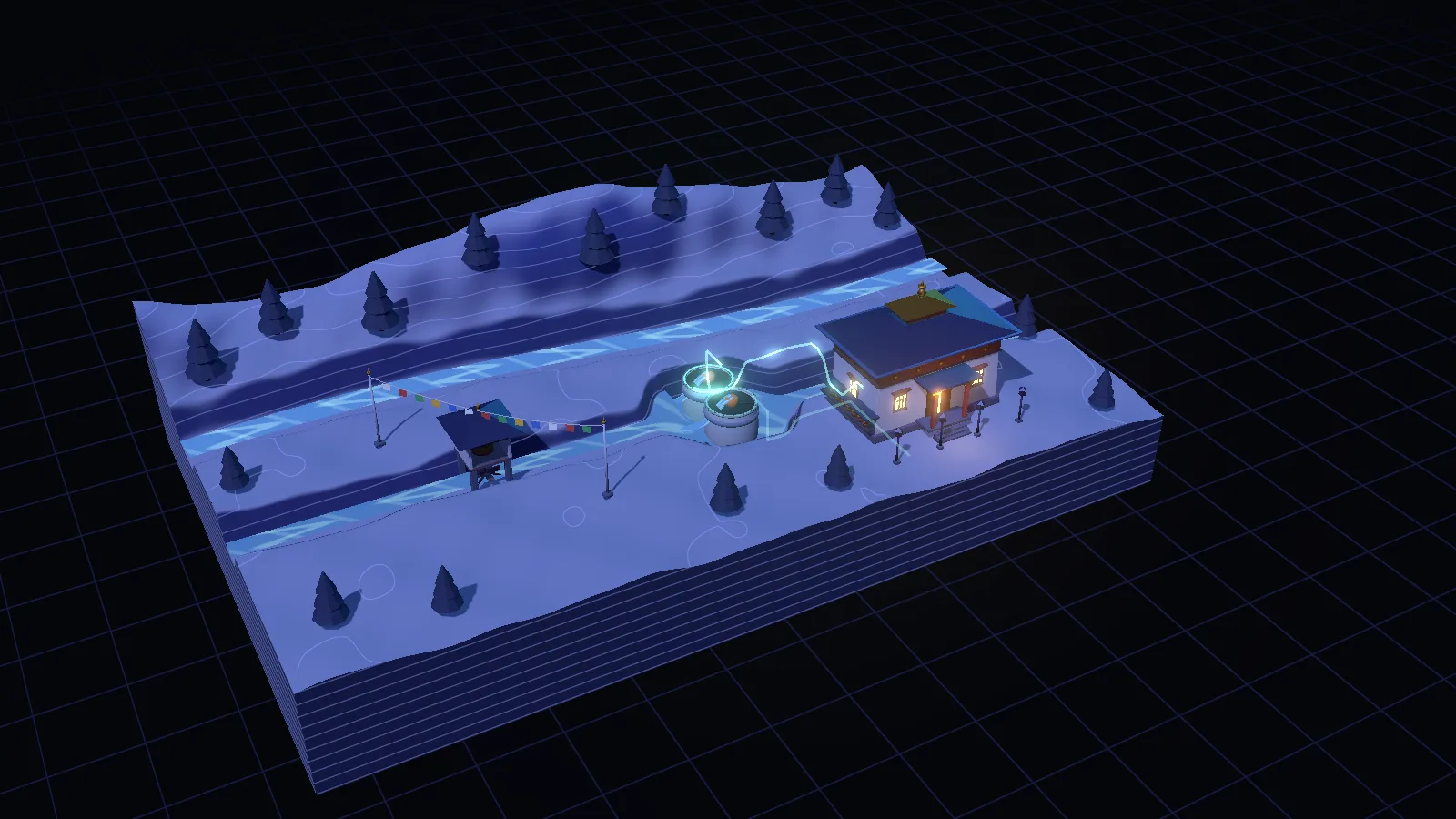
Next to the prayer wheel, a second wheel for light.
Why here Here, water already turns the prayer wheel. We only add a second wheel.
Water already turns the prayer wheel here, day and night.
Turbine 1 powers a smoke alarm and safe lights. The butter lamps stay, but a fire is spotted early.
Turbine 2 lights the courtyard at night.
In winter there is less water. One turbine rests, the other keeps the lights on.
What it shows Honest about winter: one turbine rests, the essentials stay on.
Honest about winter: one turbine rests, the essentials stay on.
Turbines
1 / 2
Power
0.50 kW
Per day
12 kWh
2 × PROTUR 300 side by side · 75 litres per second (winter about 40) · 1.2 m drop
Example data
Example 3 of 3 · Near Gelephu
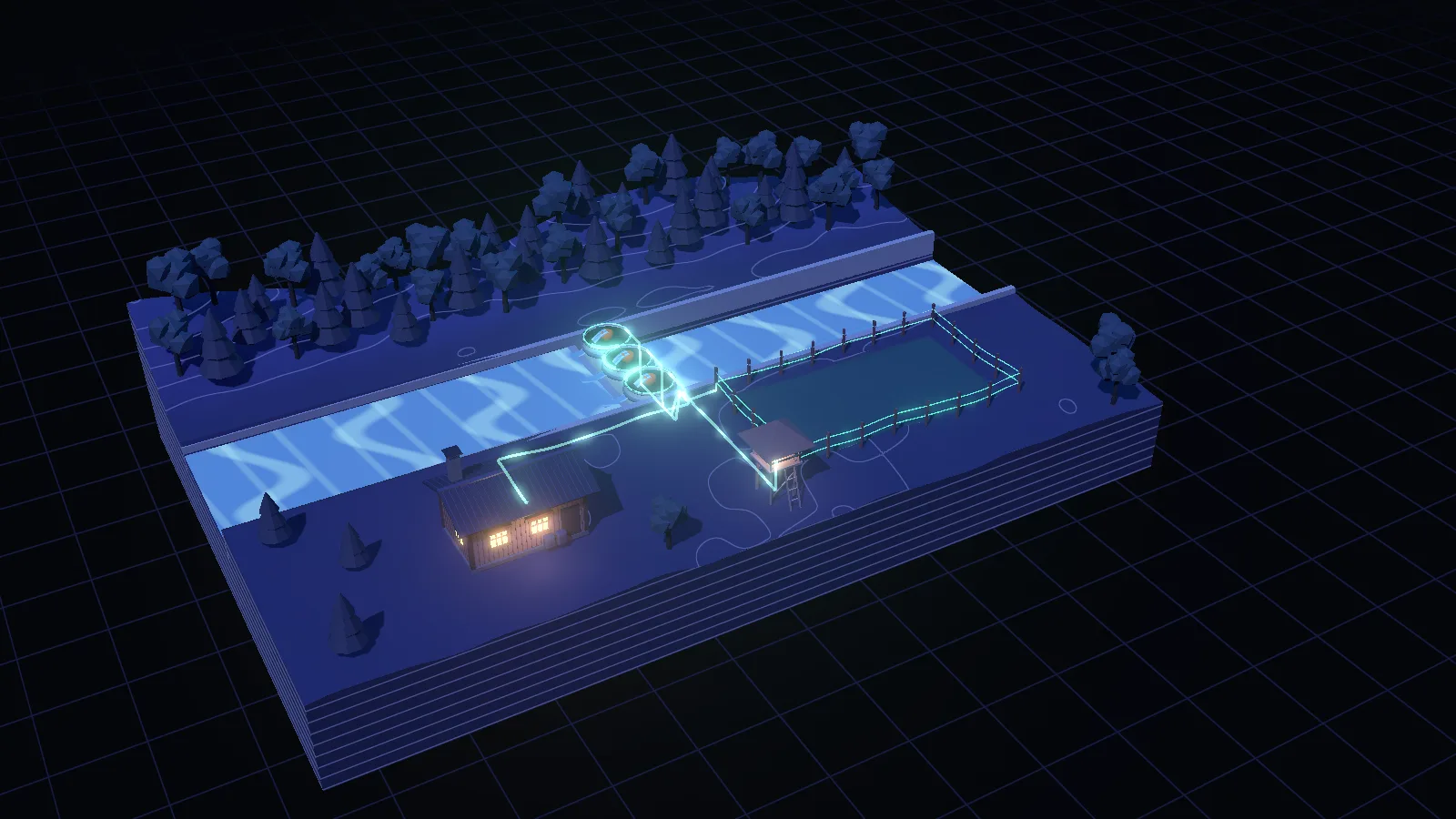
The canal already flows. Now it can guard the fields.
Why here In the warm south, canals already run along the fields.
Farmers have a canal for rice and cardamom. At night, elephants come for the crops.
Turbine 1 keeps the electric fence on all night.
Turbine 2 runs fans that dry cardamom, instead of burning firewood.
Turbine 3 lights the farmers’ watch hut.
What it shows Bigger water, bigger model: one canal guards, dries and lights.
Bigger water, bigger model: one canal guards, dries and lights.
Turbines
3 / 3
Power
2.8 kW
Per day
68 kWh
3 × PROTUR 600 side by side · 270 litres per second · 1.2 m drop
Example data
Underground cable faultHealth post · vaccine fridgeBoarding houseComputer roomBlack-necked cranesWater prayer wheel (chhukhor)Smoke alarm + safe lightCourtyard lightWinter: 1 of 2 runningElectric fenceElephants come at nightCardamom dryer · no firewoodWatch hut light
7 · What they share
What the three have in common.
A drop of at least 0.6 m.1Phobjikha: 3 × 1.5 m2Chokhor: 1.2 m3Gelephu: 1.2 m
Water that flows all year.1Phobjikha: Mountain stream2Chokhor: Mill race3Gelephu: Irrigation canal
People close by.1Phobjikha: A school and health post2Chokhor: A temple by the prayer wheel3Gelephu: A farmers’ canal
A need that cannot wait.1Phobjikha: Underground cable fault2Chokhor: Smoke alarm + safe light3Gelephu: Elephants come at night
Bhutan has hundreds of places like this.
8 · Learning together
What we would like to learn together.
How much small water flows in winter, and where. Bhutanese engineers know these valleys best.
Possible places, not surveyed
9 · Next step
The next step would be simple.
One winter of measuring water at three sites, chosen together with Bhutanese partners. The data would be shared openly, and only then would we talk about a pilot.
01
Measure
One winter, three sites
02
Share
All data, openly
03
Decide
On a pilot, together
10 · What each side gains
What each side gains.
For Bhutan
Over time, turbines could be assembled in Bhutan.
Bhutanese technicians build and run it.
Power that keeps working when the line goes down.
No dams. Forests and rivers stay as they are.
Real data for the next decisions.
For the Czech Republic
A partner and real experience in the Himalaya.
A new chapter after 15 years of relations.
Terrain and rivers: AWS Terrain Tiles (SRTM) · Borders and dzongkhags: Natural Earth