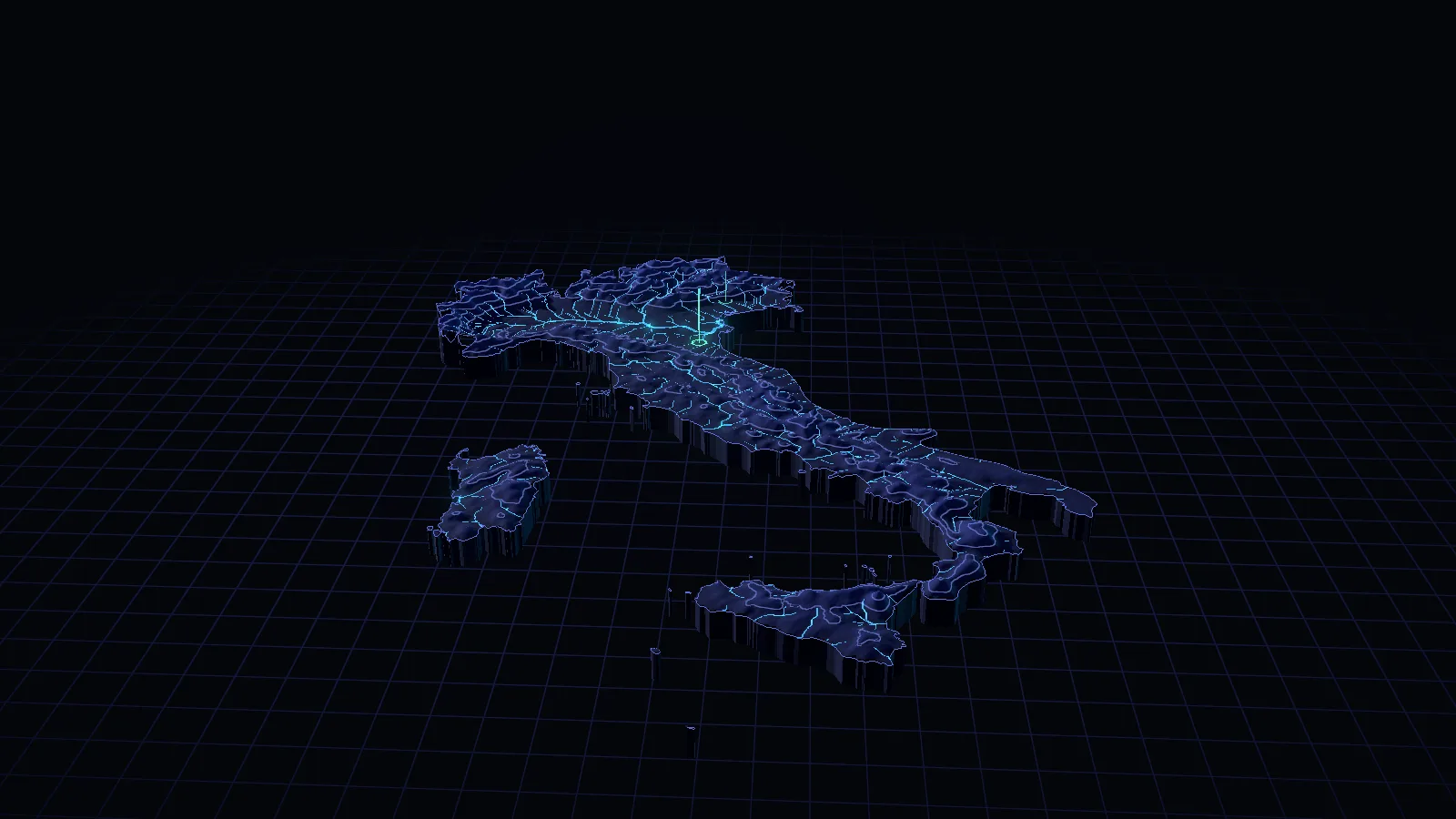
Italian farmers irrigate about 2.2 million hectares. Vines, orchards, citrus and vegetables often depend on canals, pumps and reservoirs.
2.2 million hairrigated in Italy, 2023
ISTAT, Struttura produttiva delle aziende agricole 2023
1 · Canals
Most of the water comes by canal.
Irrigation and land-reclamation consortia supply water to most of the irrigated land. The rest is drawn by farms from their own sources.
61%of irrigated land gets water from consortia and other public networks
ISTAT, Struttura produttiva delle aziende agricole 2023
2 · Drought
Water is not always there.
Severe drought hit 38% of irrigated farmland in the two years to early 2023. In May 2024 Italy declared a national state of emergency over drought in Sicily.
38%of irrigated farmland hit by severe drought, 2021–2023
CNR-IBE Drought Observatory (via Greenpeace Italia, ANBI) · Presidenza del Consiglio dei Ministri
3 · Smarter water
Canals are getting smarter.
Consortia automate gates and measure flows, and farms move to micro-irrigation. Gates and sensors need power wherever they stand.
ANBI
4 · Small water
The water is already there. Right next door.
Canals, drops, mill races and outflows run past gates, vineyards and villages. Too little for a normal turbine. Enough for PROTUR.
5 · PROTUR
A turbine without blades.
Made in the Czech Republic, or built with local partners. It needs a drop of just 0.6 m, runs day and night, and needs no dam and no oil.
Several turbines together can run a small olive mill in the village, so the oil is pressed right after the harvest.
Cheese dairy
Cools milk and powers a small dairy in the hills.
Crop drying
Runs the fans of a dryer for grain, hazelnuts or tomatoes.
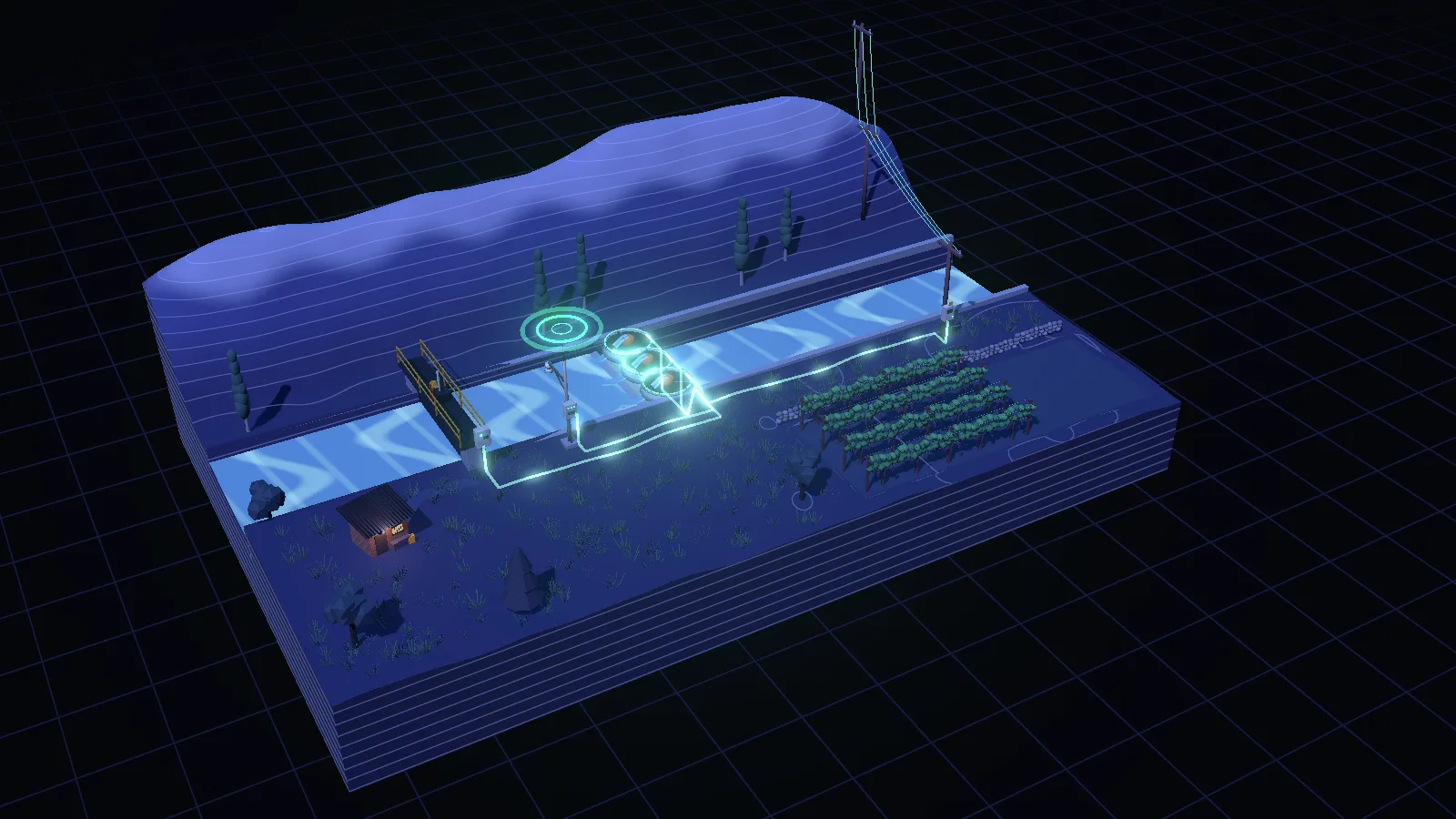
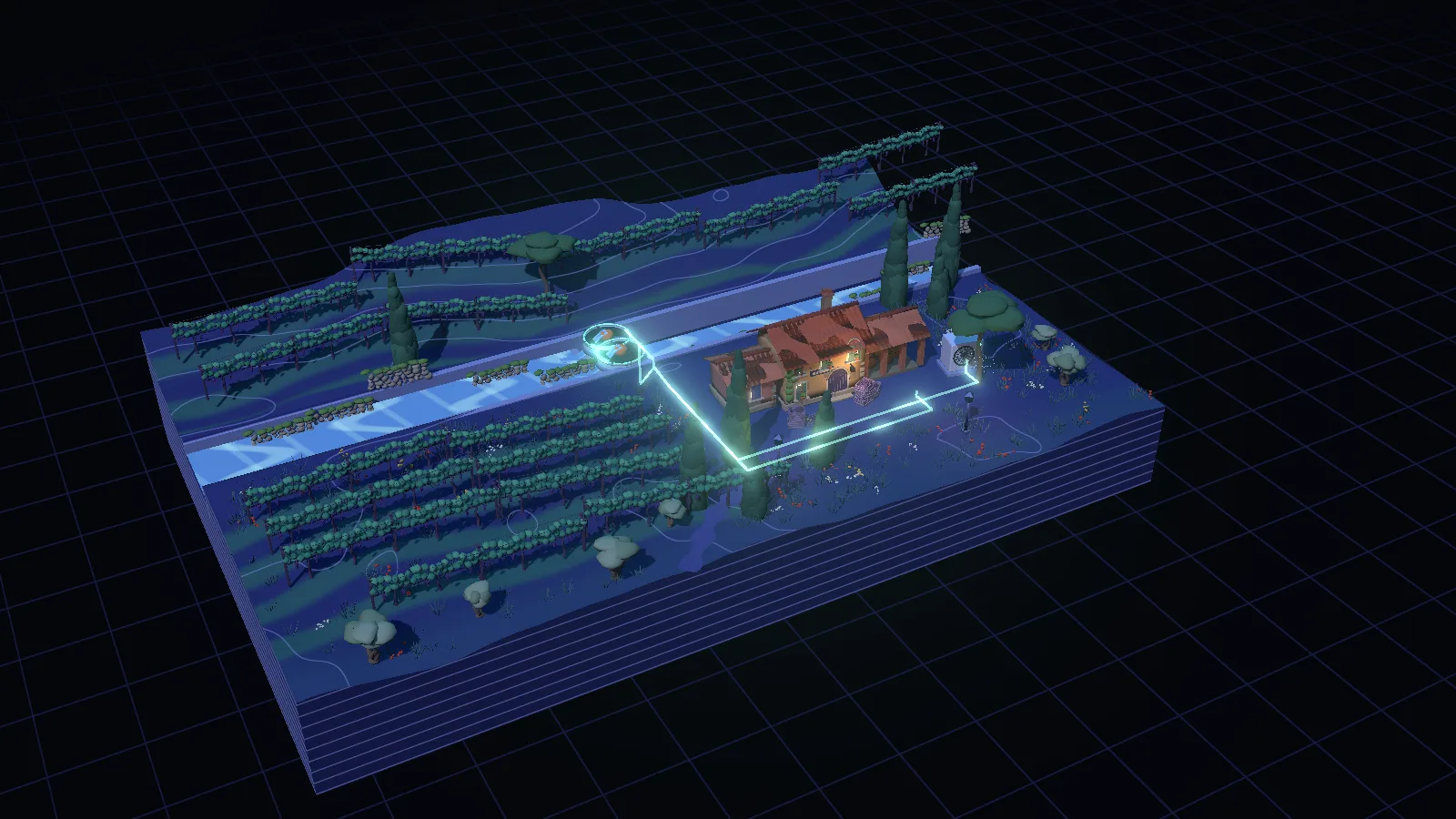
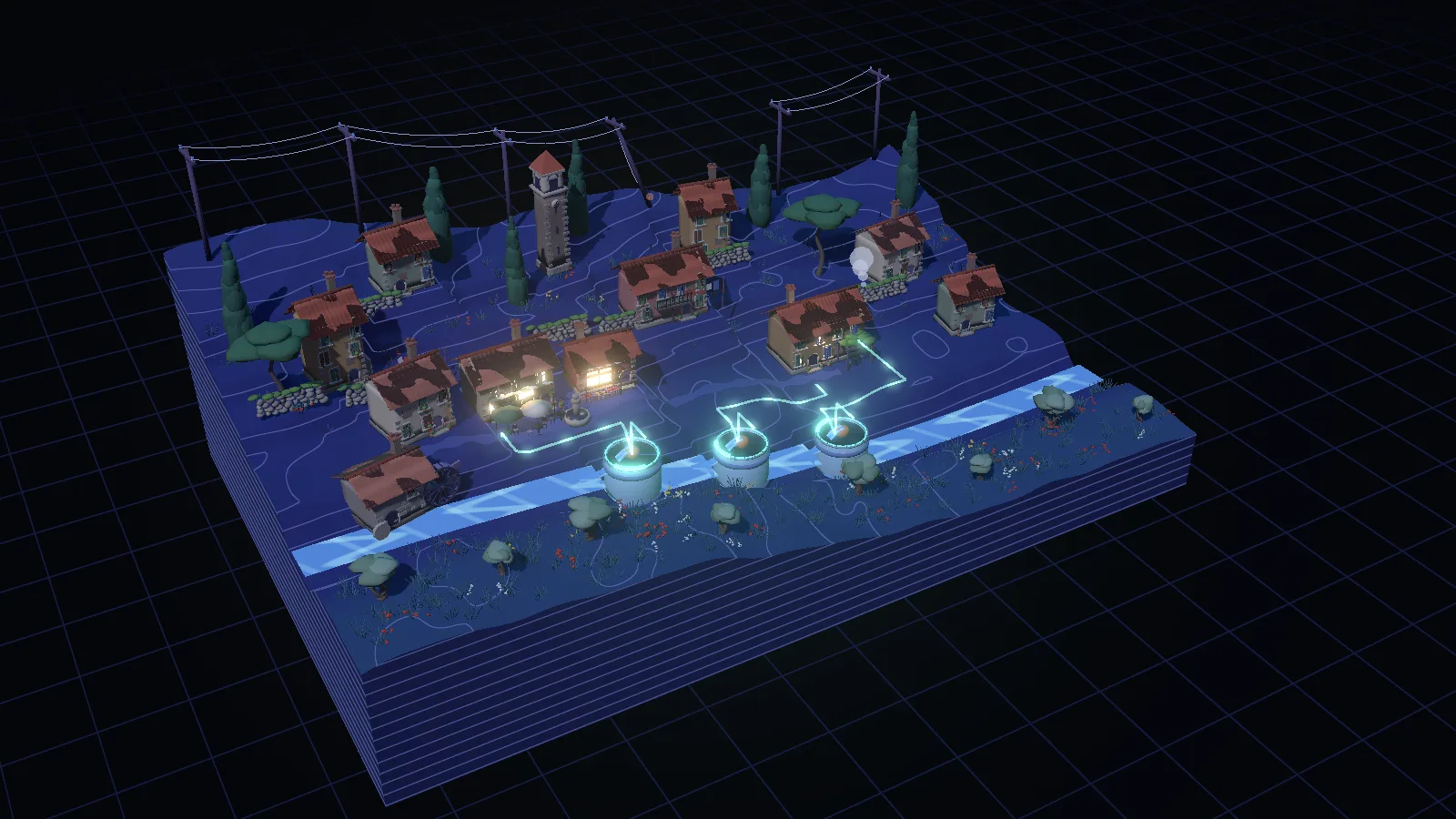
1IRRIGATION CANAL · EMILIA-ROMAGNAGates on an Emilia-Romagna canalIrrigation canal · Romagna plain · gates & sensors2BY THE VINEYARD · VENETOA Veneto wineryCanal by the vineyard · Veneto · winery3VILLAGE ABOVE LAKE GARDA · LOMBARDYA village above Lake GardaMill race · hills above Lake Garda · village
Example 1 of 3 · Emilia-Romagna
The irrigation canal runs on its own water.
Why here Gates and sensors need power, and canal water can make it: on the Canale dei Mulini in Romagna, the region allows up to 990 litres per second, up to 300 for irrigation and the rest for a small hydro plant.
On the far branches, gates are still set by hand: someone drives out to check the level.
Turbine 1 powers the level and flow sensors and reports to the consortium.
Turbine 2 drives the gate, now moved remotely.
Turbine 3 sends what is left to the grid.
What it shows Sensors, data and gate motor run on the water the canal already carries.
Sensors, data and gate motor run on the water the canal already carries.
Turbines
3 / 3
Power
1.6 kW
Per day
38 kWh
3 × PROTUR 600 side by side · 270 litres per second · 1.2 m drop
Example data
Example 2 of 3 · Veneto
Fermentation stays cool, even at harvest.
Why here Veneto has more vineyards than any other Italian region: 103,500 hectares.
In the hot harvest weeks around Conegliano, the tank chillers run all day.
Turbine 1 keeps the fermentation tanks cool, around the clock.
Turbine 2 lights the cantina and the courtyard.
What it shows Water from the same canal irrigates the vines and cools the wine.
Water from the same canal irrigates the vines and cools the wine.
Turbines
2 / 2
Power
0.37 kW
Per day
9 kWh
2 × PROTUR 300 side by side · 75 litres per second · 1.0 m drop
Example data
Example 3 of 3 · Lombardy
When the storm cuts the line, the mill race keeps the lights on.
Why here Above Lake Garda, mountain streams drove mills for centuries: paper making in the Valle delle Cartiere at Toscolano goes back to the 1300s.
When a summer storm cuts the line, the bar, the shop and the guest rooms go dark.
Turbine 1 keeps the bar and the shop lit.
Turbine 2 powers the osteria and its guest rooms.
Turbine 3, one step lower, heats water for the guest rooms. The same water works three times.
What it shows A channel once built for the mill now keeps the village lit.
A channel once built for the mill now keeps the village lit.
Turbines
3 / 3
Power
0.71 kW
Per day
17 kWh
3 × PROTUR 300 one after another · 40 litres per second · 3 steps of 1.2 m
Example data
Hand-set gates · far branchLevel & flow · dataRemote gateSurplus to the gridHarvest weeks · chillers all dayTank coolingCantina and courtyard lightsOak barrelsSummer storm cuts the lineBar and shopOsteriaHot water · one step lower
7 · What they share
What the three have in common.
A drop of at least 0.6 m.1Canal: 1.2 m2Winery: 1.0 m3Garda village: 3 × 1.2 m
Water that flows through the season.1Canal: Irrigation canal2Winery: Canal by the vineyard3Garda village: Mill race
Power needed on the spot.1Canal: Gates on an Emilia-Romagna canal2Winery: A Veneto winery3Garda village: A village above Lake Garda
A need that cannot wait.1Canal: Hand-set gates · far branch2Winery: Tank cooling3Garda village: Summer storm cuts the line
8 · Learning together
What we would like to learn together.
How much water flows in each canal through the season, and where drops already exist. Italian consortia know their networks best.
Possible places, not surveyed
9 · Next step
The next step would be simple.
One irrigation season of measuring water at three sites, chosen together with Italian partners. The data would be shared openly, and only then would we talk about a pilot.
01
Measure
One season, three sites
02
Share
All data, openly
03
Decide
On a pilot, together
10 · What each side gains
What each side gains.
For Italy
Local power for gates, sensors and cooling.
No dams. Water stays in the canal.
Real data for the next decisions.
For us
A partner and real experience in Italian water management.
Relief: AWS Terrain Tiles · Country outline: Natural Earth · Regions: ISTAT boundaries via openpolis/geojson-italy
Places
Three places. In numbers.
Example data
Gates on an Emilia-Romagna canal
Canal
PROTUR 600
1.6kW
Powers
Level and flow sensors, remote gate, surplus to the grid
Several turbines together can run a small olive mill in the village, so the oil is pressed right after the harvest.
Cheese dairy
Cools milk and powers a small dairy in the hills.
Crop drying
Runs the fans of a dryer for grain, hazelnuts or tomatoes.
Cookies and measurement
With your consent we use cookies to measure how the site is used. Nothing is stored until you choose. You can change your choice at any time under “Cookie settings” at the bottom of the page. Privacy policy